Pages

Tuesday, 16 November 2010

Oh crumbs!

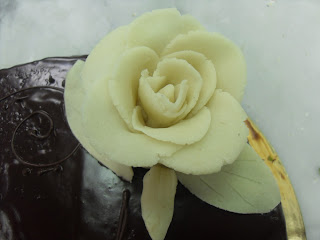
Friday was another day of cake making, however this time we got a hearty workout as we turned to mechanical aeration. The cake of the hour was the Alhambra cake. This is a recipe specific to LCB, and is a take on the protected recipe of the Sachertorte. It is very rich, very moist, very chocolaty and very very tasty. Alhambra consists of - a chocolate and hazlenut sponge, baked and brushed in a coffee and rum soaking syrup, filled with a rich chocolate ganache, covered in a layer of ganache, covered again in a chocolate glaze, piped with the word 'Alhambra' and decorated with marzipan roses. Basically its not a last minute jobby. But this doesnt mean the chef didnt manage to make it look like it was. In demo I was, yet again, slightly astounded by the skills on show. Especially the perfectly smooth glossy finish (you will see why later). I think I'll let the cake speak for itself.


In class there was a lot of chocolate, which for me means a lot of mess. The cake itself was quite fun to make. First off we made our batter. To get the necesary aeration we made it in three parts, dry ingredients, creamed 'wet' ingredients and a french meringue and gently folded them together, trying to avoid losing the air we'd spent 10 minutes whipping into our meringue. As they baked we made the rest of our components, ready to finish off. It is the finishing off that caused me problems. Specifically the chocolate glaze. In demo chef poured hers over her ganache covered cake and it settled in a perfect glossy coat. Mine chose to be bubbly, uneven and a bit dull. Not good. I hasten to say the picture has actually made it look worse than it was, even so I think my report card would be saying 'must try harder'. Despite this the cake still tasted too good to last very long and I ended up serving it over the bar at work when customers spied it lurking in the back.  

Bubble trouble
My rose (well okay then, carnation)
Very zesty

Another week, another topic. This time we have turned our hands to some classic, basic cakes and the theory that goes along with it. Current theory hot topics are aeration methods closely followed by cake mixing methods. For those of you not privaledged enough to be fed this information in school, the three menthods of aeration are chemical, natural and mechanical. Heres a quick break down. Chemical aeration uses products such as baking powder to create the rise in the cake. This is what is most commonly used in home cooking and what I have relied on for many years. Natural aeration is what we saw last week with the breads where a cheeky bit of yeast is used to give the lift. And finally, most painfully, is mechanical aeration. Opposed to what the name suggests this is pure man power. The batter is aerated by hand - whisk till you can't whisk no more.

Thankfully lesson one on cakes we stuck to the tried and trusted chemical aeration and only had to endure the minor pains of creaming butter into a frenzy. In demo the chef taught us four such cakes. A fruit cake, lemon cake, almond and pistachio and some lovely little madelines. Anyway, enough chat from me, here are the pictures your waiting for.

Chefs mirrored plate of delight


Madelines, described aptly by a coursemate as 'baked love'


This week we were out of demo and straight into the kitchen to make our lemon cake and madelines. It was our first, and eagerly anticipated, lesson with the head of patisserie so we creamed and zested till our hearts content and hoped for the best. Feedback this week was really good and detailed, by which i mean chef literally tore our cakes to pieces to show us where we went right/wrong. The more specific you can get your feedback the better, for example chef said my madelines were good but would have been better if they were slightly less whisked - perhaps just a minute too much. Madelines are definatley something I dont mind perfecting at home, they are cute, bite-size, tasty and (with a few tricks) relatively easy to make - whats not to love?

Friday, 5 November 2010

Bready, steady, go.

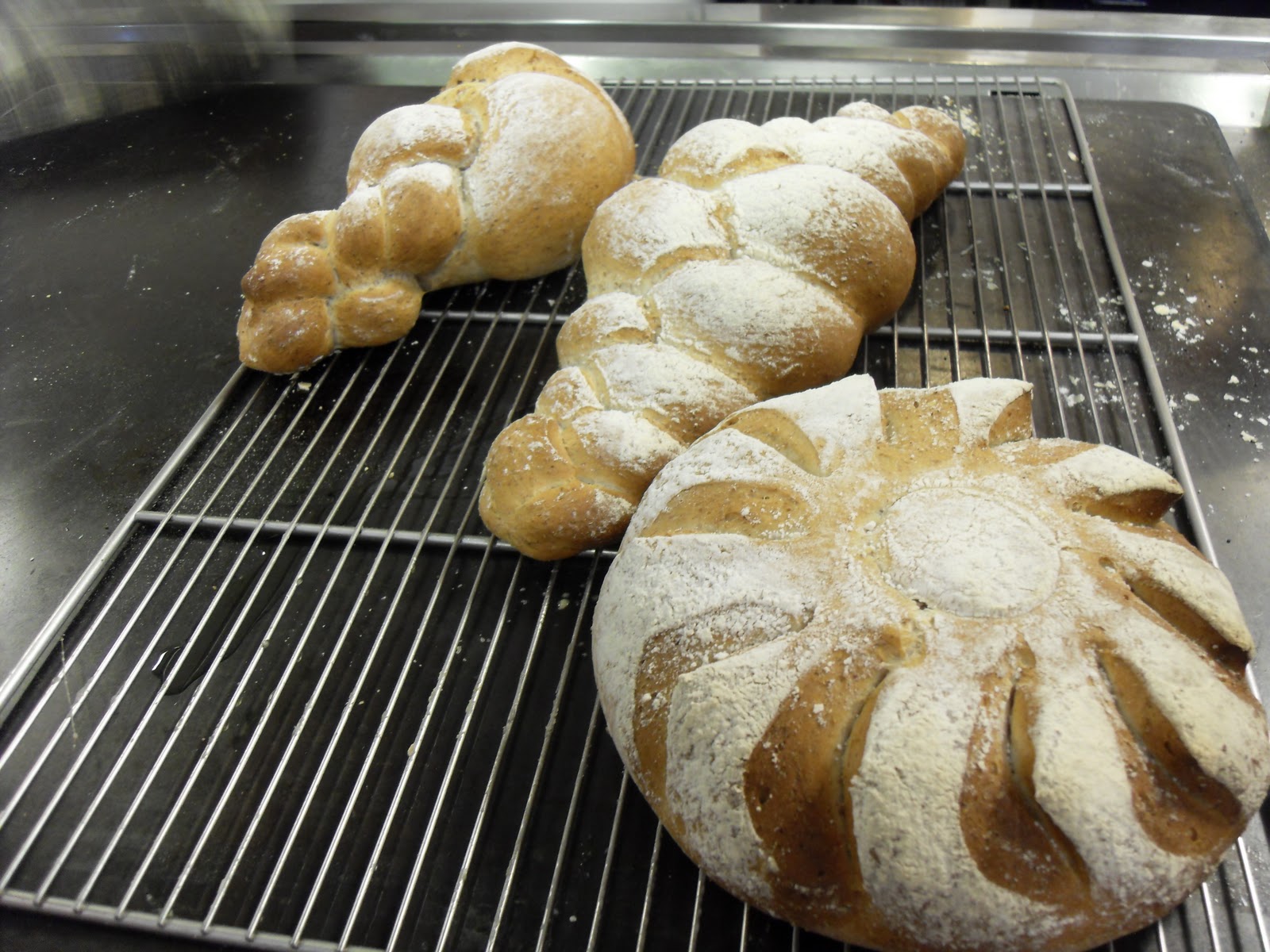
In my opinion, baking doesnt get more classic than your good old fashioned loaf. Freshly baked bread is just one of those things that is faultless in taste, touch and smell, especially when its cooked well. Today was the first of many lessons in bread I will be taking over the coming year. In class chef showed us focaccia, brown bread, small white buns and soda bread. We also covered quite alot of bread theory - the joys of pastry school. I've been quite looking forward to learning some of the tricks of the trade with bread so as dull as it sounds, the ins and outs of yeast were like top gossip to me. The bread was, as expected, delicious and the perfect start up to the day.


Todays practical was just a really fun class. Kneading bread is a good stress reliever - I even served mine a few hefty karate chops. We made the soda bread and the adorable bread rolls. This was a good balance because the soda bread is a rustic, dense bread and the rolls and much more refined. We spent a fair while shaping and decorating the white dough into spirals and knots, left them to prove and got them in the oven. I practically had my nose up against the oven for the next 10 minutes waiting for them to cook with a knob of butter in hand ready to get a freshly cooked roll out of the oven and into my mouth in record time. Happy days at LCB.

Soda bread


Cuties


Packed up and ready to go home


Swanning Around

Yesterday was the last day of our pastry lessons, finishing off the collection nicely with choux pastry. Choux is the stuff used for eclairs, profiteroles and other tasty cream filled delights. And so that is what the chef showed us. In demo we were shown how to make the pastry itself, unlike the others this one is made on the stove to a gloopy consistency and then piped into the various shapes and sizes. Once the pastry is cooked it is filled, normally with large quantities of oh-so-naughty cream and other assorted treats. Here are some examples from chef, take note of the particularly gorgeous swan with a glint in his eye who stole my heart.


True love


In class we had to make the choux swans and the eclairs. This was a particularly daunting class because these are one of our potential exam dishes and this was a first attempt at them. The choux swans need to be piped evenly and their delicate necks need to be just that, any thing fatter and it becomes more of a choux goose. Although in class I found the techniques fine, time for this recipe is tight. There is alot to do and I'm sure those kitchens are in some kind of time warp, an hour easily passes in what feels like 15 minutes. As a result the end of class was a bit stressy as everyone tried to get the finishing touches to their pieces, we had swans to construct, fruit to arange, cream and chocolate to pipe and a sense of elegance to maintain (or at least attempt). In the mad dash to finish a few of my swans ended up with slightly bog eyed or backwards facing, but they were okay. Slightly terrified of having this in the exam though.


Poor backwards swan


For some reason yesterdays class was a bit stressful and on the tube home I was a bit distracted and missed my stop. I was shattered and feeling slightly bitter towards my swans when a strange thing happened. A woman next to me made me open my tupperware to see what was inside and spent the next 2 minutes delighting over my swans. Suffice to say this made my day. However, once her stream of compliments ended she spent the rest of the tube journey singing quite loudly so my ego wasnt too inflated.


Saturday, 30 October 2010

Sweet Success

Friday was day two off puff pastry. In demo there was a distinct air of nerves around the room with the crucial will they/won't they (rise) question being bandied around. Whilst we sat contemplating our puff pastry futures, chef used her perfectly made example to create a fresh fruit puff pastry tart and a stack of delicous crisp puff pastry biscuits called palmiers. For those of you who havent ever had the joy of trying a palmier the only advice I can give you is - eat one as soon as physically possible. Furthermore, make sure you buy more than one because they are extremely moreish. Palmiers are infact so good that chef didnt dare leave it till the end of class to let us taste them, passing them round in our break.

I think I'm in love.


In comparision to recent behaviour, I'm going to class this as a 'light breakfast'. So light infact that one slice didnt suffice..


Moving swiftly onto practical. Not much of an intro because I'm far to excitable to tell you: it worked! I made a tasty puff pastry from scratch and managed to turn it into one tasty tart and many, many palmiers. Revelling in our shared success there was quite a 'friday feeling' in class and everyone left in high spirits. Even managed to sneak in a cheeky pint before heading home. Even better, I had a big box of palmiers for the journey. Not sure how quickly I will be attempting to re-create the puff pastry recipe, although the combined end results of taste and satisfaction do make it more likely.


Slice, packed and ready to go home.


Delightful


Thursday, 28 October 2010

Professional Puff

Today we took what I felt was quite a large step away from amateur baking with the challenge of pâte feuilletée. Don't get me wrong, the recipes we have cooked so far have been delicous but its not often you come across a home chef with puff pastry in their repertoire. Puff pastry is made in 2 parts, the paste and the butter. The butter is folded and rolled into the paste to create a fine layered pastry ,and thus creating the puffed up effect as the butter cooks. Doesnt sound too bad so far. However, in order to achieve optimum 'puff' there must be around about 1000 layers of butter and paste. Thats right - the millenium pastry. In demo today we were taught how to incorporate the butter and 'turn' the pastry to create these layers. Its quite a tricky thing because as the layers get thinner the chances of the butter seaping its way through increase, so it requires a fair amount of tlc, and plently of time to rest and cool between folds. After making  the dough it is left to cool, in our case overnight, before using it. So for the rest of class chef made a puff pastry tart called a jalousie which is a puff pastry lattice filled with almond creme and poached fruit. Taste sensation.


On to practical. As you may of guessed, we were making our own puff pastry, or at least attempting to do so. We were also making our version of the tasty almond treat above but with a bit of a cheat. As our puff pastry wouldnt be ready till the next day, we were given a batch of ready made puff pastry to use. Cheeky. I wasnt on my top form today and had a few small mishaps. My attempt at rolling out the pre-made puff pastry to the desired rectangle resulted in more of an x-marks-the-spot treasure map. Luckily chef saved the day. Im also not 100% confident about my puff pastry but I will get to see the result of that tomorrow when I actually cook with it. Chef assured me it was fine but some of the layers looked a bit dubious to me so fingers crossed! The take-home treat for today turned out to be just that. We poached our pears, whipped up out almond creme and constructed our fine pastry. Done.


The final event of the day was our first one on one tutorial with our mentor chefs. We had to have a chat about where were were doing well/badly, what we wanted to improve etc and most importantly we got our marks for our first batch of practicals! So far I am averaging a 4.1 our of 5 which is a merit. Very happy baker. However, its still very early days and I still have that pesky puff pastry to face tomorrow..